The ability to place your products or services in a favourable business position.
Competitive advantage refers to factors that allow a company to produce goods or services in a way that is better than its rivals. Customers match the value proposition of a product or service to their needs. The ultimate aim of course is to make customers repeat their purchase. To gain competitive advantage companies fend off competition by ever evolving uniqueness. However, customers are just as likely to purchase on a hunch, just because it feels like the right thing. People typically desire what is easy for them such as choosing a market leading product. Armed with competitive advantage, companies do not want to jeopardise comfort and familiarity.
So how does one gain competitive advantage? Firstly, if you get to number one first. Secondly, price aggressively early on to win market share giving the company lower costs, higher relative market share, and higher profitability. Early share advantage matters a lot. Offering free products or services can be a clever tactic for establishing customer habit. Companies have to keep their product up to date, but changes should be introduced in such a way that a new version of the service or product retains the competitive advantage of the old. Look in at the business to establish the outward facing processes and people that effect the customer experience. Alternatively, study the customer experience - their wants and needs and then an organisation can deliver processes that meet the needs of clients and thereby deliver a considerable competitive advantage over time. Customers are at their happiest when all the business processes are aligned to meet their needs.
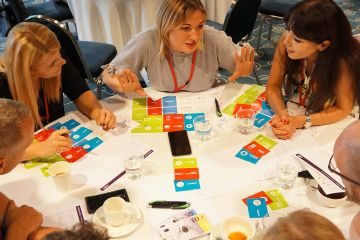
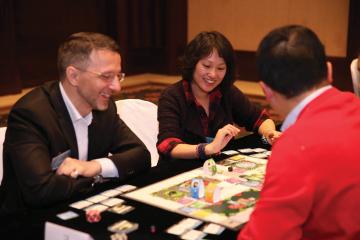
Team building programs and experiential business games are an effective way of highlighting the importance of competitive advantage to employees. They are also a great way of developing behaviours and a mindset towards competitive advantage.
Look at this selection of related popular programs. Need help in deciding? Looking for something else?